Monday, June 27, 2011

Rex, the Musical Savant


This is a wonderful story of how an individual's strengths can more than make up for their shortcomings. Compassion and patience are the building blocks of success. Who's to say that Rex is impaired?

I believe Rex will discover a rich future full of beautiful, original music. He will be able to find his way through the world through texture and noise. When you can perceive so much, the areas in which you are lacking don't really matter. I wish Rex and his mother all the love and happiness in the world.

Sunday, June 12, 2011

QuickCues and other Mobile Apps for ASD's

The Non-profit organization Fraser has produced QuickCues, a mobile app which helps to provide cue cards for those on the Autism Spectrum. Here is a demo video:


I don't know much about this app other than what is shown in the demo video, but it seems like a wonderful idea. With all of the technological advances taking place, why not take advantage of this?

In middle and high school, my aide encouraged me to write down hints for communicating in a notebook. I simply wrote down the names of my peers and a thing or two I could discuss with them, something simple like music, tv shows, or a sport we played together.

The only issue with this is its inconvenience, and visibility. I remember in my sophomore year, a "friend" (read: mean-spirited acquaintance) was going through my notebook, and came across my page of conversation starters. Her eyes started darting intently across the page, as it wasn't the usual doodle-filled chemistry notes; she asked, "what's this?" I turned bright red and grabbed it back immediately. I told her that it helped me figure out what to say to other people, trying not to make a big deal out of it. For a second I felt like a complete stalker, tracking the actions and interests of my peers. I stopped carrying around visual cues after that.

Though there is a useful aspect in writing down things to help remember them, it just gets inconvenient at times. Flash cards take up space, are cumbersome, get dirty easily, and could easily reveal your differences. An app like this, or even a word document on your phone with reminders, is discreet and private. If you don't want such an app to be revealed, a vague title like "QuickCues" can be written off as a general study guide - also, it doesn't hurt that iPhones and iPods can be password protected. You can give yourself as little or as much security as you feel is necessary.

This app is $4.99. Though I personally feel I wouldn't want to spend so much money on it (I'm a cheapskate), I think Fraser is providing an important service and such an app would be worth investing in for a lot of people. If you don't want to spend the money, you could probably create flashcards, or a word document with text from an online guide - it would be free, but with a similar idea.

I hope this app becomes available for more devices, and not just the Apple devices. You don't even need an iPhone to use it. Though I don't have this app, I've found my iPod Touch indispensable. Along with all my music, it has relaxation sounds, Theta and Beta waves (also for relaxation), some photos, games, books, my calendar, and the small internet browser doesn't hurt either. I've written papers on it, and even a few of these blog entries! It's nice because I can carry a lot with me in such a compact package. If you don't want to spend the money on an iPod Touch, I'd reconsider - there are some less expensive models out, and they can be purchased on different websites for even less! I got my iPod on eBay and saved about $80 off of Apple's price.

Sorry, I just sounded like I'm pitching a product! Haha. But seriously, this is a great idea. Would you use an app like this? Why or why not? Do you know of any similar ones? I want to hear about them! Maybe we could start a list. So show me what you've got!

Thursday, June 2, 2011

Aspies and Cats

My cat does this thing when he's happy where he'll curl his front paws in and out. It reminds me of a stimming thing, as I do this with my toes too.

He also is very sensitive to noise. He'll run away when my mom drops something on accident, and if I stomp too loudly. He's afraid of the dishwasher, as well as my guitar. If he hears something noisy, he'll run away in panic.

He's terrified of new people. The only people he lets close to him are my immediate family and a few quiet, gentle friends. With us he is very loving and affectionate, but if we ever have a lot of people over, he'll hide, shaking under my mom's bed.

His motor skills aren't very good, either - he can't run in a small circle - he can only run in large, clumsy ones. He is constantly invading my other cat's personal space as well - he's socially awkward, like me.

My kitty and I have a lot in common. Sometimes I wonder if he's an aspie too.

Whether he is or not, though, we make a good team, and I'm happy to have someone in my life as eccentric as I am (even if he's a cat).

Sunday, May 8, 2011

Don't Forget

Non-Aspies have awkward moments too!

I know a lot of people who tend to say or do things that make another person uncomfortable. This will happen completely on accident. There are different types of these:

The people who lack a sensor: My friend Emma is completely inappropriate, but so adorable and hilarious that you really don't care. She loves to slap her friend's asses, or give "boob kisses", and a typical comment from her will be (if your shirt is wet), "aww, you look like you're lactating!" (meant affectionately, mind you.)

When I first met Emma, I was completely taken aback by her bluntness, but then realized that some of the unspoken social rules in our society don't make sense. Plus, spending time with her is exciting - it's refreshing to drop all of the filters you are used to accumulating in everyday interactions. It's nice to have a friend who regularly challenges these rules, whether she realizes it or not!

The people who lack boundaries: two of my roommates started cleaning my room when I wasn't home and a potential subletter was coming over that night. Neither of them are on the Autism Spectrum. All I did was politely explain to them that it was an invasion of personal space, and to either wait for me or let me know if they feel compelled to do this in the future.

While their actions did make me uncomfortable, it made me realize: non-aspies mess up too. Social awkwardness is universal. Who cares?

A person's unique disposition: I have a classmate, Ashley, who is not like other girls I know. As far as I know she doesn't have Asperger's, but her personality is very unique when compared to the rest of my peers. She is very mellow, has a smooth-sounding voice, and always appears very relaxed. Almost every statement she makes ends with a laugh (amused? uncomfortable? I can't really tell.) and a sigh. There are occasionally awkward pauses in conversation with her, but when spending time with her I generally feel like I am in good company, as she is very pleasant to be around.

A number of my peers have attempted to explain Ashley's eccentricities. Some have stated that it's based on her geographic origin, as the majority of us are local, and our city is notorious for being obnoxious, uptight, and constantly stressed.

I don't know why Ashley is so unique, but it's nice to see someone who is so pleasantly calm all the time. I once had a conversation with her about being a design student, and the stresses that go along with it. She told me, "I've never had to think so much about things as I have this year." - followed by her trademark laugh and sigh, of course. I understood how she felt completely - could it be anxiety, general stress? Who knows?

The fact is, as much as we like to pretend, no one has everything together. Other people also question things constantly, and worry a lot. Though my psychiatrist likes to attribute this trait of mine to having Asperger's, I attribute it to being an American. We're stressed people! It's really an issue if everyone from a culture feels this way. I think we should work on trying to fix the culture from the inside and not the individuals.

There are other people like us: My friend Bobby is one in a million. I also think he has Asperger's, but I don't tend to dwell on this possibility - we are all unique, after all. Another friend described him as a "friendly floater" - he is acquaintances with everyone, but is not particularly close with any one group of people. Whether he realizes it or not, he is defying our culture's basis for social standards, which I think is really awesome.

Bobby is the master of the calm, one-sided speech. He loves to talk. He has a really great baritone-esque voice- he would make a great voice actor - but he will talk nonstop about the most random things. He tends to have some awkward pauses here and there, and conversations with him don't tend to follow the typical vapid quality that I experience with most friends in passing (where the person acts like they care, but they really don't). Unfortunately, a lot of people are uncomfortable around Bobby, just because his presence makes you question our society's social rules. Lame, right?

The thing about Bobby, though, is that he is one of the most genuine people I know. He spends all of his time doing community service, helping people, giving without any expectation of his thoughtfulness being returned. He loves to bake food for all of his friends, and I feel like other people take his big heart for granted. He is very trusting, probably too trusting - I feel like he is very easily manipuated.

While it would be beneficial for him to learn to read people better, I think that it is nice to see that not all people are robots of one another, and that not all people try to be like everyone else. People like Bobby are a breath of fresh air in an otherwise clone-like society. I just hope that being aware of his presence will allow others to embrace their own eccentricities.

Moral of the story? NOT ALL AWKWARD PEOPLE ARE ASPIES. We are not the trademark of eccentric. Other people exist who are equally unique. Non-Aspies question social rules and feel as if they are awkward, too. The fact that people like this exist make me feel relieved.

Stay unique, everyone.

Monday, March 28, 2011

I made a Formspring!

While I think some aspects of social media are a bit ridiculous, I figured it could be cool in case any of you would like to get an Aspie's perspective on things. You can be anonymous, and I'm anonymous, so really, what have we got to lose?

All I ask is that you be respectful. Not too hard, right?


Some example questions: Do you stim? What do you think the good things about being an aspie are? What are some aspie-friendly activities to do while on a date?

Go on, ask me something good! I dare you, haha.

Happy asking!

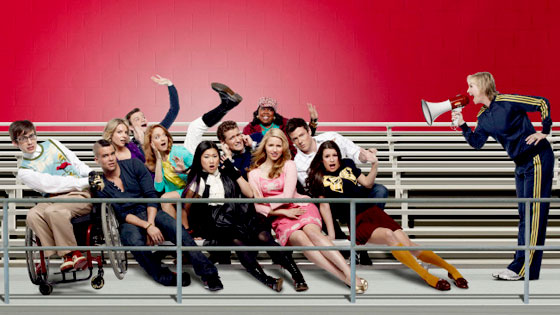
Social Commentary Through Fox's "Glee"


Okay, I'll admit it: I'm a total gleek. I adore this show, not just because the spontaneous songs remind me of my high school musical theatre days, or because of the silly humor, but because of the awareness of others that Glee is cultivating.

I believe Ryan Murphy's main goal in creating this show has to do with spreading the ideals of social justice. A lot of season 1 is based around Quinn's hardships in being a pregnant teen, while the majority of season 2 has dealt with the adversity Kurt has dealt with in being an openly gay teen in a midwestern town. Within these stories, there are plenty of smaller plots based around the need for self-acceptance and loving oneself.

The show has done a good job of bringing in characters of all different backgrounds, and while not every type of individual is represented, most every viewer will be able to find a character whom they can relate to. I can see a lot of myself in both Tina and Kurt. Even though Tina's character has been neglected this past season, I found myself hiding behind my shyness like she has, and it is nice to see her come out of her shell. With Kurt, I can relate a lot to the bullying storyline, as well as to the feeling of being impossibly different - In the episode Laryngitis, Kurt tried to put on an act of being a heterosexual, John Mellencamp fan, modeled after his father, but he realized that his efforts were futile, as this wasn't who he really was. I feel like my entire four years of high school consisted of me adopting different identities, trying to be someone I'm not. I'm sure everyone can relate to this story.

I know a lot of critics are angry at Glee for pushing the "liberal agenda", but tell me this: how is spreading hatred okay? I don't care if the bible tells you homosexuality is wrong. If it encourages the condemnation of any group then I don't care what book you're following, I will only see your hostility.

This show's critics need to understand that aside from the fluffy songs, these are experiences that real people go through at some point in their lives. If anything, we should be glad that such a show exists because it helps educate viewers on accepting others and oneself.

Glee doesn't look down on any characters for being different. Artie is seen as equal to the rest of the kids despite being paralyzed from the waist down- he's even able to play on the football team. Becky Jackson, a cheerleader who has Down's Syndrome, is treated with the same respect as any other student. The only character whose actions are discouraged against are those of Dave Karofsky's - but even then, his bullying is met with empathy, as well as hope that he can learn to accept his own homosexuality.

With all of this work toward social justice, though, it makes me wish for a character with Asperger's Syndrome. I know you can't have your cake and eat it too, but COME ON PRODUERS, MAKE IT HAPPEN!

Still in doubt of the good this show can do? Then check out this tumblr. Happy viewing!

Tuesday, March 22, 2011

Aspie to NT, and Back Again

Be polite. Don't talk behind a person's back. Have a firm handshake. Learn to properly recognize the occurence of sarcasm and jokes. Learn to deliver sarcasm and jokes in an appropriate manner. Play coy. Don't butt into places you're not wanted. Don't drag the conversation down. Don't be a hermit. Don't draw unnecessary attention to yourself - hide that which makes you different.

As an Aspie in a Neurotypical world, I've had to, along with numerous other folks, learn how to blend in and not put a spotlight on my differences. From the outside I am what appears to be a perfectly average young woman, molded to a counter-culture which has become the norm (we're all hipsters here, espescially if you attend my school). I listen to alternative music with the occasional ironic hip-hop; I buy clothing from secondhand stores and H&M; I enjoy making fun of Justin Bieber and Ke$ha but am secretly fascinated by them - aren't we all?

To put it bluntly, I'm about as unique as a molecule of salt on a Big Mac. The only thing separating me from the rest of the world is the way my brain functions, and even that barrier is slowly starting to break down. My attractive appearance and (learned) pleasant disposition have either cancelled out my social mishaps, or have given me new opportunities to learn the ropes of socializing in an appropriate manner.

Though we all may moan about how our lives suck, I've been dealt a good hand, I guess.

In all of my learned appropriateness, however, the thing that haunts me to this day is the memory of being bullied. Yes, there was a time when I was disliked: death threats, harrassment, cyberbullying, you name it. I've been picked on for every feature on my body, every strange interest and/or social mishap, every honest mistake I've ever publicly made. Shit happens, you know how it goes. Everyone has their own sob story, and mine is no different from yours.

Perhaps my internal optimist stepped in, though, because while parents and teachers and therapists and guidance counselors and school officials were trying to change the structure of the school to make things easier for me, I wanted to relieve them of this pressure and change myself to fit in with my pre-existing environment. I resisted every accommodation that was made for me and instead turned myself into a chameleon.

Now, being socially malleable isn't so bad. I work well on teams and like to think that I am able to adapt to many social situations easily. I often appear eager and friendly. Being this way has made me flexible but flimsy - always wanting to please everybody but never having a backbone. Since I've taught myself to "go with the flow", I am often indecisive and may end up doing things that are unrealistic, or that I don't want to do.

Individuals who are bullied often take two routes: become severely depressed, or fight back with kindness. I've chosen the latter. While it is an arguably more pleasant and humane thing to do, falling under the teachings of virtue and goodness of most religions, I now realize I have set myself up for repulsion. I've become so sickeningly sweet that I repel many of my peers. I hold a strict moral code: never talk negatively about a person; never partake in the spreading of rumors; and never cheat, steal from, or deceive another person.

Though I've managed to protect myself from bullying, I've also managed to protect myself from having a fulfilling life, always living in the shadows of my fears, afraid to offend. I fear being an abrasive, obnoxious individual - but aren't those the people who get the furthest?

I need to re-learn some of my Aspie tendencies. Maybe I shouldn't shy away from talking about the Super Mario games if they're something I'm really passionate about. Besides, who the fuck cares how odd I am, as long as it doesn't hurt anyone? Such outspokenness will teach me to be more assertive, so I can maybe talk my way into getting a promotion at work or avoid being given bitch work because I'm so damn "easygoing".

It has taken me years to acquire the social understanding I have today. As far as outward appearances go, I've gone from Aspie to NT. Now, I think it's time to regress back to being the oddball. I'd rather things be that way.

Guys, we've got it good. Don't forget it.


Powered by WebRing.